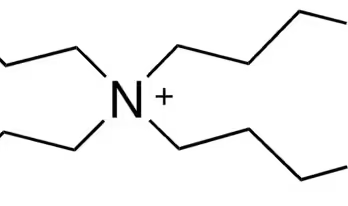
| Boiling Point | 127°C (per Sarchem's existing published data) |
| Melting Point | −45°C (per Sarchem's existing published data) |
| Color | Yellow |
| Formula Weight | 129.25 |
| Physical Form | Clear liquid |
| Chemical Name or Material | N,N-Diisopropylethylamine |
| UN Number | UN2733 |
| Molecular Weight | 129.25 g/mol |
| CAS Number | 7087-68-5 |
| Applications | Peptide-synthesis manufacturing (non-nucleophilic base for coupling reactions) |
DIPEA is a tertiary amine whose bulky diisopropyl substituents create significant steric hindrance around the nitrogen atom. That steric bulk prevents the base from acting as an effective nucleophile itself, while it remains fully capable of deprotonating acids and scavenging HCl or other acidic byproducts — making it the base of choice whenever a reaction needs basicity without unwanted nucleophilic side reactions.
DIPEA is a workhorse base throughout peptide-synthesis manufacturing, used in carbodiimide- and uronium-based coupling reactions (alongside reagents like HOBt, HATU, and CDI featured elsewhere in this batch). It’s equally standard in pharmaceutical intermediate manufacturing as an acid scavenger for acylation and alkylation reactions, and in palladium-catalyzed cross-coupling chemistry as a mild, non-nucleophilic base.
No related products found.
Mainly as a non-nucleophilic base in peptide-synthesis coupling reactions, an acid scavenger in pharmaceutical intermediate manufacturing, and a base in palladium-catalyzed cross-coupling chemistry.
Its bulky diisopropyl groups sterically block the nitrogen from acting as an effective nucleophile, so it can deprotonate acids/scavenge acidic byproducts without itself reacting as a competing nucleophile in the reaction.
Yes — it's classified Danger, highly flammable, toxic if inhaled, and causes serious eye damage; full PPE including respiratory protection and a fume hood are recommended.
Yes, for every lot (SKU S1437).