| Boiling Point | 198–199°C (lit.) |
| Melting Point | −3 to −1°C (lit.) |
| Density | 1.438 g/mL at 25°C (lit.) |
| Color | Yellow |
| Linear Formula | C6H5CH2Br |
| Quantity | 500g |
| Formula Weight | 171.04 |
| percent purity | ≥98.0% (GC) |
| Physical Form | Clear liquid |
| Chemical Name or Material | Benzyl Bromide (stabilized with propylene oxide) |
| UN Number | UN1737 |
| Molecular Weight | 171.03 g/mol |
| SMILES String | BrCc1ccccc1 |
| Refractive Index | n20/D 1.575 (lit.) |
| CAS Number | 100-39-0 |
| EC Number | 202-847-3 |
| NACRES | NA.22 |
| PubChem Substance ID | 24891612 |
| UNSPSC Code | 12352100 |
| MDL Number | MFCD00000172 |
| InChI | 1S/C7H7Br/c8-6-7-4-2-1-3-5-7/h1-5H,6H2 |
| InChI Key | AGEZXYOZHKGVCM-UHFFFAOYSA-N |
| Beilstein/REAXYS Number | 385801 |
| Quality Level | 200 |
| Reference Assay | 98% (GC), reagent grade |
| Applications | Benzylating agent for O-benzylation of alcohols (hydroxyl protecting group chemistry) |
Benzyl Bromide is an aromatic halide closely related to benzyl chloride, but with bromine in place of chlorine at the benzylic position — a change that generally makes it a more reactive leaving group and, correspondingly, a faster-reacting benzylating agent. Commercial material is typically stabilized (Sarchem’s material with propylene oxide) to prevent slow HBr release and decomposition during storage.
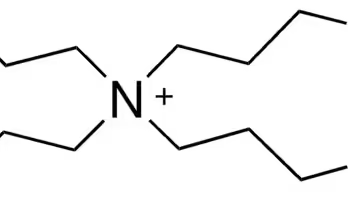
Benzyl bromide’s primary use is as a benzylating agent, protecting hydroxyl groups via O-benzylation reactions in multistep organic synthesis. It’s also used as an initiator in atom transfer radical polymerization (ATRP) for synthesizing block copolymers such as poly(styrene-b-methylmethacrylate), and as a reagent in Menschutkin-type reactions to form quaternary ammonium and imidazolium salts.
No related products found.
Mainly as a benzylating agent for protecting alcohols in organic synthesis, and as an ATRP polymerization initiator and Menschutkin-reaction reagent.
Generally yes — bromide is a better leaving group than chloride, making benzyl bromide react faster in most nucleophilic substitution and benzylation reactions.
C6H5CH2Br, molecular weight 171.03 g/mol.
Yes, for every lot (SKU S2029).